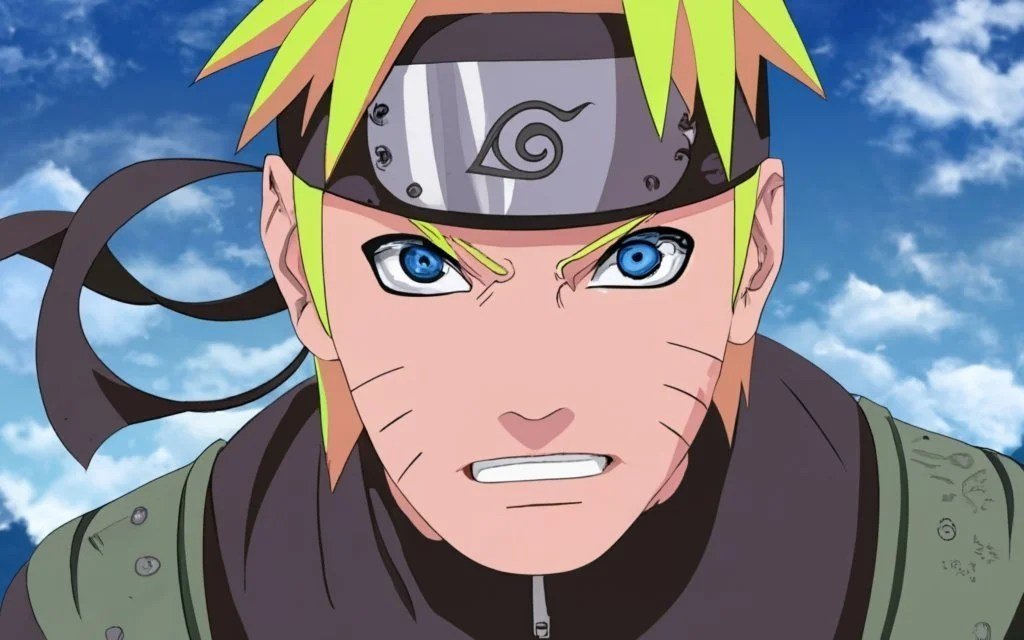
Ever wondered how the legacy of one shonen titan, Naruto Uzumaki, casts a surprising shadow over another, Demon Slayer: Kimetsu no Yaiba? It's not about a literal crossover – though the idea of Naruto in the Taisho Era is a fanfiction dream, like "Enter Mikazuki Academy!" envisions. Instead, it's about the profound influence of narrative devices, specifically the infamous "Talk no Jutsu," and how Demon Slayer didn't just adopt it, but elevated it to an art form.
This isn't just about heroes fighting demons; it's about how compassion, empathy, and the power of understanding became potent weapons, evolving from Naruto's idealistic sermons to Tanjiro's raw, heartfelt pleas. Let's delve into how Demon Slayer took a foundational shonen trope and, dare we say, made it better.
The Legacy of a Whisper: How Naruto's "Talk no Jutsu" Echoes in Demon Slayer
For many of us, "Talk no Jutsu" is synonymous with Naruto Uzumaki. It describes his unique, nonviolent ability to break through the hardened defenses of his enemies, persuading them with an almost magnetic charisma and boundless empathy. This signature move was more than just a plot device; it was central to Naruto's journey as an orphan striving for respect and embodying Konoha's "will of fire," a philosophy that preached peace through love and understanding, even in a world steeped in conflict. It truly was groundbreaking for battle shonen, introducing a focus on the psychological and emotional dimensions of victory, as seen in pivotal moments like his confrontations with Pain. If you’re curious about the mechanics behind this iconic ability, you can Dive deeper into the origins and impact of Naruto's signature ability.
Naruto's influence on contemporary shonen is undeniable, and Demon Slayer stands out as a clear successor that learned from its predecessor. While both series champion empathy, their execution of this powerful narrative trope tells a fascinating story of evolution.
When Ideals Clash: The Flaws in Naruto's Execution
Despite its revolutionary spirit, "Talk no Jutsu" in Naruto wasn't without its critics. Its primary flaw often lay in its execution, sometimes coming across as "canned and corny." The sudden, seemingly unconvincing conversions of characters holding vastly different, often deeply ingrained ideologies could stretch credulity. At its weakest, this persuasion could inadvertently legitimize an objectively cruel societal structure by presenting its ultimate aims as righteous, rather than fostering genuine, two-way empathetic development. When "Talk no Jutsu" faltered, it often felt less like true connection and more like "stubbornly idealistic rambling," leaving some readers and viewers wishing for more nuanced resolutions. If you’ve ever felt a moment fell flat, you might want to Explore the specific criticisms and why Naruto's approach sometimes missed the mark.
This is where Demon Slayer steps in, learning from these shortcomings and forging a path that feels distinctly its own.
Tanjiro's Compassionate Blade: Demon Slayer's Masterclass in Empathy
Demon Slayer successfully reconfigures the "Talk no Jutsu" trope by fundamentally altering its focus and application. Unlike Naruto's emphasis on broad idealism and establishing a new social order, Tanjiro Kamado's motivations are far more immediate and existential: his unwavering goal of restoring his sister Nezuko's humanity. Tanjiro doesn't employ empathy evangelically to convert opponents or to reinforce a grand sociopolitical ideology. Instead, his pleas are born from a desperate, personal struggle for survival and reconciliation. It's a crucial distinction, as for Tanjiro and Nezuko to achieve their goals, it is those on the opposing side who must ultimately choose to receive and act upon empathy. This subtle shift makes all the difference, allowing Demon Slayer to truly Discover how Demon Slayer masterfully re-engineered this powerful narrative device.
The Tangible Touch: Why Tanjiro's Empathy Resonates Differently
One of the most powerful elements distinguishing Tanjiro's empathetic appeals is the tangible presence of Nezuko by his side. Her very existence, her struggle, and her unwavering bond with Tanjiro make his pleas—that she is human, that demons deserve understanding—feel profoundly real and deeply personal, rather than abstract "shinobi ideals." This dynamic fosters a "simultaneous outflow and inflow of empathy," enhancing the emotional depth of the storytelling even amidst the "utter hopelessness" inherent in the human-demon conflict. To truly grasp this core difference, you should Understand how Nezuko's presence fundamentally shifts Tanjiro's empathetic appeals.
While Naruto's conversational style is often likened to a "battering ram," relentlessly pushing his viewpoint, Tanjiro's approach is more nuanced; his "tongue quivers to knock," with his charisma often more evident in his actions and quiet sincerity than in booming speeches. This contrast highlights a significant evolution in how protagonists engage with their foes. For a detailed breakdown of these approaches, Unpack the nuanced differences between Tanjiro's grounded empathy and Naruto's broad idealism.
Significantly, in Demon Slayer, empathy functions as the exception rather than a "dogmatic rule." Moments like Kagaya Ubuyashiki's blessing for Tanjiro and Nezuko to travel together, or Giyu Tomioka's initial decision to spare Nezuko, illustrate successful instances where empathy is received and acted upon. However, the series doesn't shy away from the harsh realities of its world. The Entertainment District arc powerfully demonstrates that while Tanjiro can see humanity in his enemies, empathy for the Kamado siblings does not equate to their enemies being spared; Gyutaro and Daki, despite seeing parallels with their own past, are not "converted" from their demonic paths. Moreover, Tanjiro's capacity to see the remnants of humanity in Nezuko or to offer comfort to the Spider Mother doesn't prevent him from recognizing demons as a grave threat and despising the majority for their atrocities. Understanding these complex interactions is key, and you can Analyze how Demon Slayer handles its antagonists when faced with Tanjiro's empathy.
Beyond the Hype: The "Will of Fire" Reimagined
Ultimately, the core principle of exercising restraint in the name of love, empathy, and understanding—what we broadly recognize as the "will of fire"—is demonstrably passed from Naruto to Demon Slayer. The fundamental difference, however, lies in its motivation and impact. Naruto's "Talk no Jutsu" often appears "idealistic and contrived" because "fire is held because one must," driven by a broader, almost dogmatic ideal. Demon Slayer's evolution of the trope, in contrast, feels "clutch, raw, and emotional" because "fire is held because one can," born from immediate, desperate circumstances and personal conviction. To understand the profound philosophical lineage, Delve into the shared philosophical backbone connecting these two shonen giants.
The concept of the Will of Fire itself, as a guiding principle, has permeated countless narratives beyond its Konoha origins, shaping the very definition of heroism and compassion in many shonen stories. Its adaptability and enduring relevance highlight why its influence persists, even as new series like Demon Slayer take up the mantle.
Naruto's Enduring Shadow: A Crossover of Influence
While the crossover we're discussing is one of narrative influence rather than direct character interaction, the enduring popularity of both series has naturally sparked imaginative fan creations. For instance, the fanfiction "Enter Mikazuki Academy!" envisions a thrilling school setting where powerful characters from Naruto and Demon Slayer interact, foretelling potential disaster and celebrating the distinct yet complementary strengths of both worlds. These fan-created universes, where Naruto might literally explain his ideals to a skeptical Giyu, or Tanjiro might comfort a lonely Kurama, are a testament to the strong characters and compelling worlds built by both Kishimoto and Gotouge. You can Explore the intriguing world of fan-created crossovers that bring these universes together. This creativity showcases how deep the admiration runs and how resonant these characters are across fandoms.
Demon Slayer didn't just stand on the shoulders of shonen giants; it took their lessons, refined them, and presented a powerful new vision for how empathy can truly impact a brutal world. By grounding its compassionate appeals in immediate stakes and tangible relationships, Demon Slayer offers a more raw and emotionally resonant approach to the power of connection, setting a compelling new standard for the next generation of shonen heroes.